
35 years after ADA, people with disabilities still find hotels unaccommodating
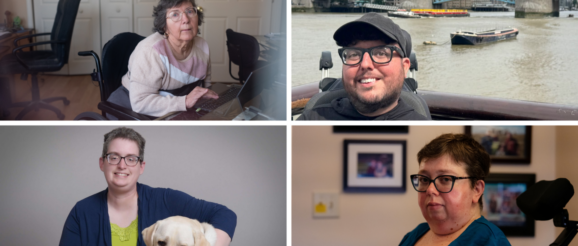
Richard Beaven for NPR, via Cory Lee, Zayrha Rodriguez/NPR and via Karen Lohr
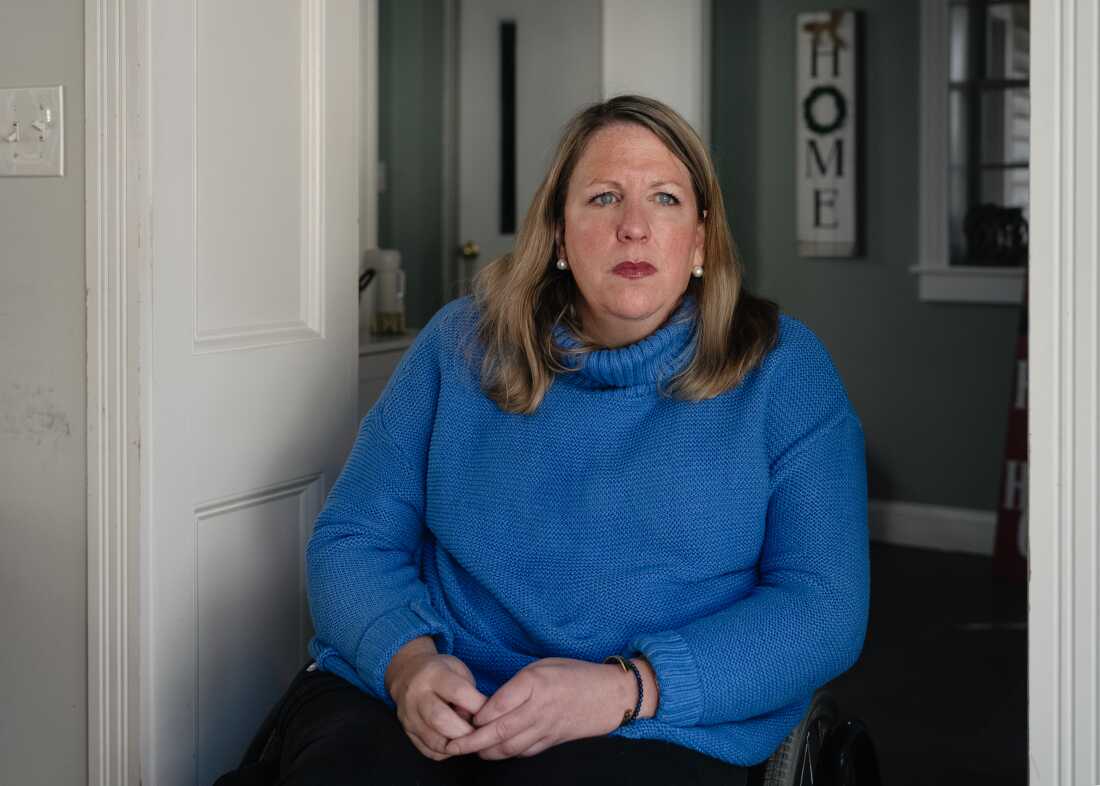
Eileen Schoch traveled to her mother’s funeral in Asheville, N.C. and found the hotel room — the one she’d called about in advance — wasn’t accessible as promised.
Schoch, who uses a wheelchair after two strokes, couldn’t use the room’s toilet without assistance from her husband or daughter. The grab bars were in the wrong place. She couldn’t get into the shower because it had a door too narrow for her wheelchair. She got sponge baths for three days.
Nor could she reach the tall bed from her wheelchair. The hotel gave her an uncomfortable cot, instead.
“You feel that you’re treated as a second-class citizen. And you don’t count,” says Schoch, a retired educator from Schenectady, N.Y.. “And it’s not a nice feeling.”
Schoch said she considered switching hotels, but she wanted to be close to other family members. After all, they’d picked that hotel because she’d chosen it first. The family brought business to the hotel, booking four rooms for three days.
Schoch asks: “After that experience, who would want to travel?”
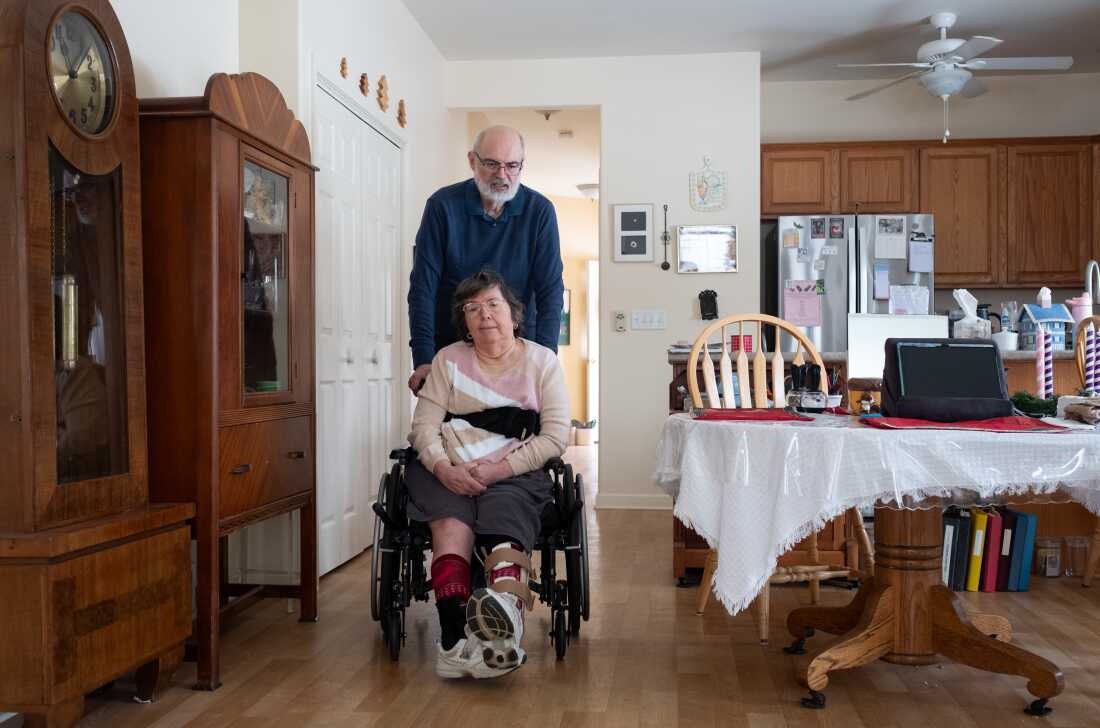
“It’s anticipation and it’s a little bit of dread,” Don Bergman of Jacksonville, Fla. says of the moment he opens the door of a hotel room. “You hope for the best, expect the worst and then deal with what you got.”
- Wheelchair users described showing up at a hotel to find there’s no accessible room available, even when they reserved one online or in a phone call directly to the hotel.
- Rooms designated as accessible often had design flaws, such as misplaced toilets and grab bars in bathrooms, or showers with thresholds and doors that block wheelchairs.
- Many complained of unsafe beds too high off the floor to reach from their wheelchairs. Some told us of falling when they tried to get in or out of a tall bed. Some broke bones.
- Respondents praised hotel staff who go out of their way to help but also expressed frustration when staffers seem to lack training to understand or fix problems with rooms that are inaccessible.
“Ultimately, our business, we want to get it right for all travelers,” says Chirag Shah of the American Hotel & Lodging Association (AHLA). “So hearing those experiences from your listeners is something that we’re attentive to.”
Laws guarantee access, but travelers feel like “second-class” citizens
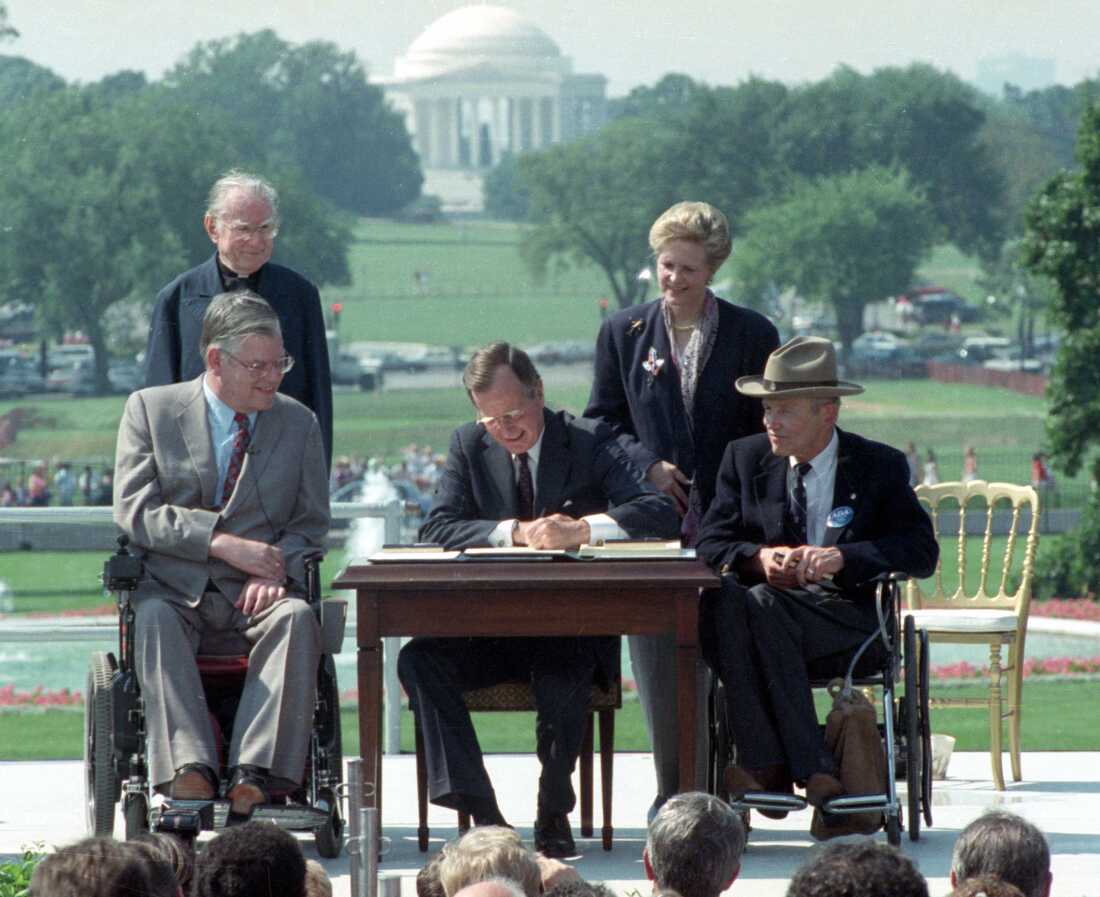
The Americans with Disabilities Act, an anti-discrimination law signed by President George H.W. Bush in 1990, requires hotels to be made accessible to people with disabilities. All hotels, motels and inns that were designed after January 26, 1993, or substantially renovated since, must be “usable by persons with disabilities.” The U.S. Department of Justice issues regulations, and experts at the U.S. Access Board, an independent federal agency, develop design standards — from the width of a door to how many rooms need to be accessible.
Sometimes, says Phyllis Klugas of Vinton, Va., that’s because people who aren’t disabled take those accessible rooms.
“Many people ask for accessible rooms that don’t need them, because they think the rooms are larger,” she says.

“These things are not that hard” for hotels to get right, says John Wodatch of the National Association of ADA Coordinators. “It’s not expensive,” he says. It takes a software fix, for example, to get reservations marked in the system, he says, and training of staff to understand how to meet the accessibility needs of disabled guests.
“You’re in the business of pleasing your customers. Hotels are good at that,” notes Wodatch, who led the U.S. Department of Justice office in charge of enforcing the ADA until 2011. “Just add this.”
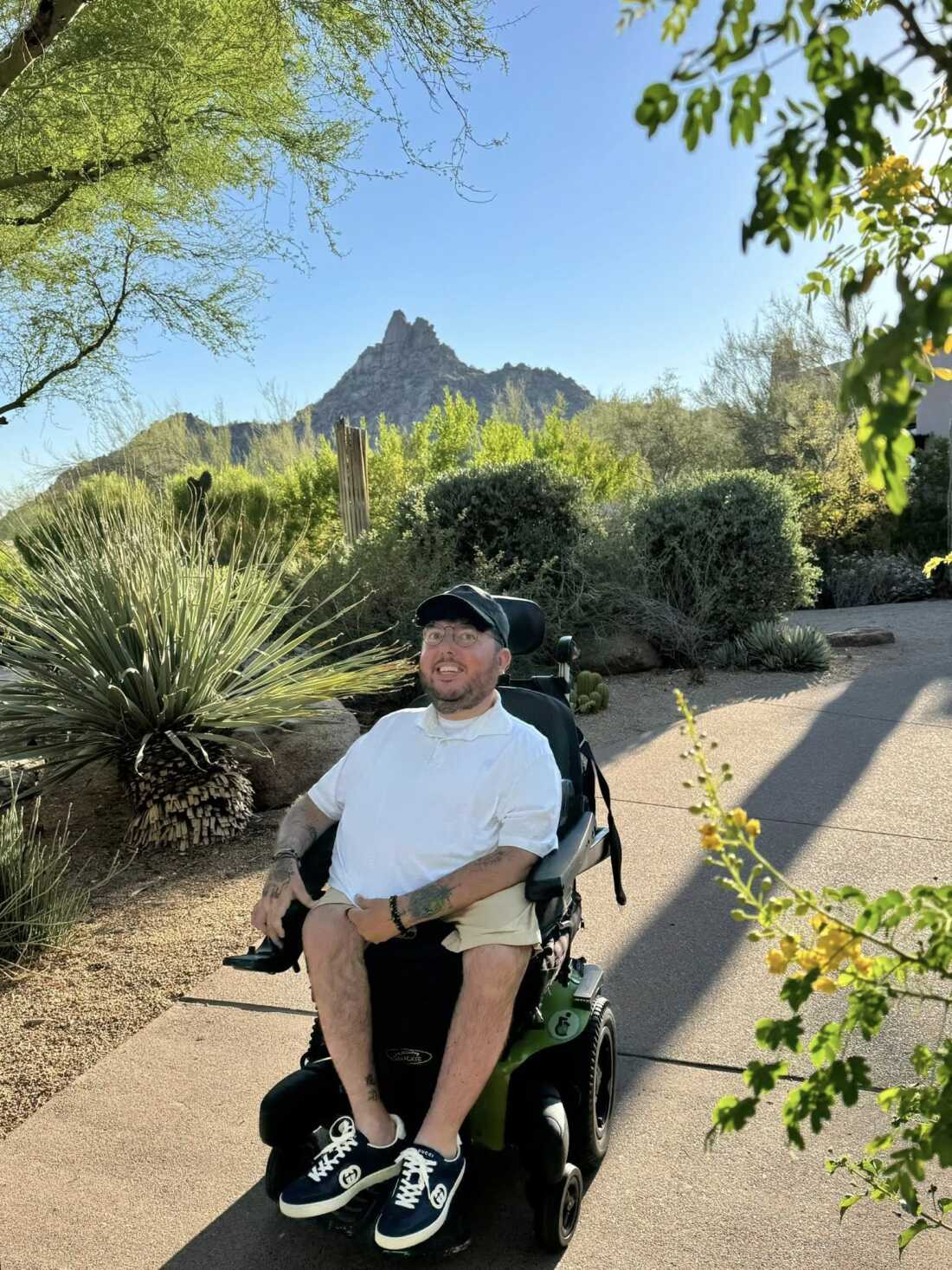
Cory Lee, who runs a travel website, says there’s an easy fix for hotels: Just add photos and videos of accessible rooms on their web site, then wheelchair users can see if a room meets their needs. Lee traveled 150 days in 2025 — from New York City to French Polynesia — and posts pictures and videos of his hotel rooms on his website, Curb Free with Cory Lee.
“The first chain that actually does that and publishes those videos is really going to get all the business from disabled travelers,” says Lee.
Abigail Fernandes drove with her two young children and a friend from her home in Maine to a wedding in Wisconsin this summer. All five of the hotels she reserved on the trip there and back were inaccessible, says Fernandes, a mental health therapist.
The front desk clerk at the hotel near the wedding ceremony said there was no room available with an accessible bathroom — even though Fernandes had researched the hotel before booking it weeks before. But, the hotel staffer said, Fernandes could use the accessible bathroom in the hotel’s lobby.
“And I was like, ‘Why am I paying this much money?’ … So we canceled it.” But that meant spending hours searching for a new hotel nearby. As a result, Fernandes, who has multiple sclerosis and wears braces on her legs, arrived 90 minutes late to the wedding reception for her close friend.
These booking problems have persisted despite decades of enforcement by the U.S. Department of Justice. Attorneys there have reached settlements after suing individual hotels and chains and in 2010 finalized rules that require hotels to make their online reservation systems accessible to people with disabilities. Also that year, the department signed a consent decree with Hilton that became a model for how to make an accessible reservation system and train hotel staff how to use it.
Shah, the executive vice president of the AHLA, says the industry has made a commitment to “significant training … to ensure that folks understand the needs of the various guests that come into the hotel.”
But a majority of the Disability Rights Section’s lawyers have left, including many long-time attorneys, since the start of the current Trump administration.

Tall beds, like “climbing a mountain”
Hotels in recent years have added thicker and higher padded mattresses and mattress covers. It’s part of a competition among hotels to create a sense of luxuriousness, notes Samantha Evans of the International Association of Accessibility Professionals, who has advised hotel companies on accessibility. But “it’s not so luxurious if you can’t get into the bed,” she says.
“Climbing up into a bed feels luxurious when you’re ambulatory,” says Emily Merkel of Charlottesville, Va., who uses a wheelchair because of an autoimmune illness, but it’s “more like climbing a mountain when you’re not.”
It’s up to the U.S. Department of Justice to set standards for furniture, but it never has set one for bed heights–even as hotels raised beds higher off the ground and more wheelchair users complained.
In 2017, attorneys at the department, in consultation with the hotel industry, worked on standards but talks stopped during the pandemic.
It’s not just tall beds that create problems for wheelchair users. Another trend at hotels is to put beds on solid platforms that go to the floor — too low for some wheelchair users.
People who use a lift device–a mechanical sling–to be hoisted out of a wheelchair need the bed to be open several inches above the floor. The feet of the device need to fit under the bed..
Erick Sandoval brings a large lift when he travels, but now often finds he can’t use it as hotels switch to heavy platform beds. Instead, he’s forced to rely upon his parents to lift him in and out of his power wheelchair.
“It’s harder on everyone and it definitely isn’t ideal as using the lift — but we don’t have another choice,” says Sandoval, a bookkeeper from Ayr, Neb.
“Right now, it often feels like ‘accessible’ is just a label, not a guarantee.”
There are barriers all over hotels — from the parking lot to the pool.
It’s not just the hotel room that vexes wheelchair users. Respondents mentioned problems throughout hotels — from the moment they arrive.
Some noted problems in parking lots, including too few spaces or spots too narrow for a wheelchair van to put down its ramp.
Carden Wyckoff, a member of Atlanta’s City Council, spoke of her frustration when she arrives and finds a tall front desk that she can’t reach or see over.
“Just that initial greeting,” she says, gives her “that feeling of ‘I’m different’. I feel excluded in this experience.”
Others mentioned doors too heavy to open, plush carpets that make it hard to propel a wheelchair, breakfast areas too narrow for wheelchairs and unclear evacuation plans for wheelchair users in case of fire or emergency.
Many respondents who travel with an aide, friend or family member they need to assist them complained that they book a room with two beds but often get put into a room with just one.
“I do not enjoy having to sleep in the same bed as my mother,” wrote Christina Buck of Seaside, Ore., “because I am disabled and hotels do not have ADA rooms with two beds in them (despite it being federal law that they do).”
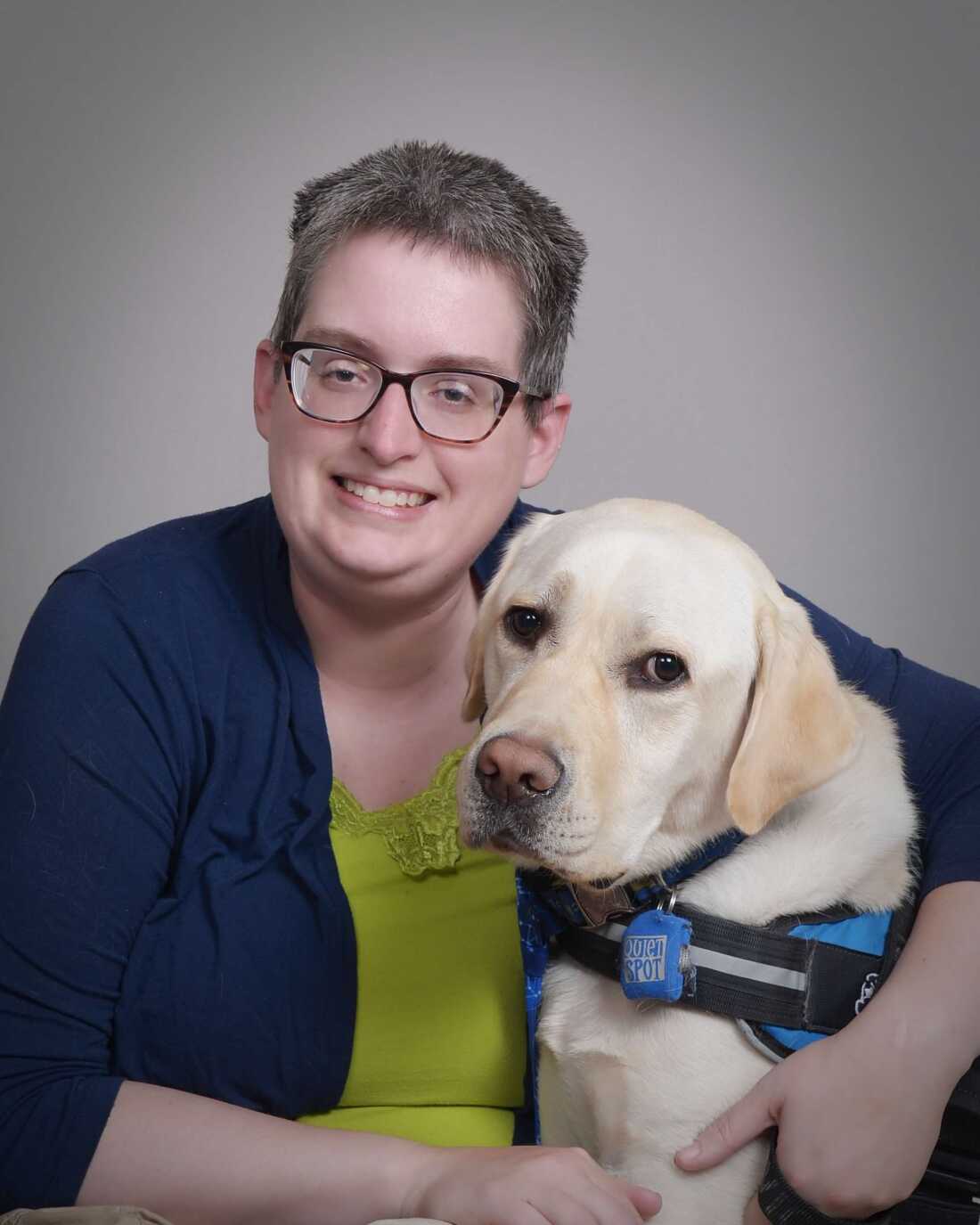
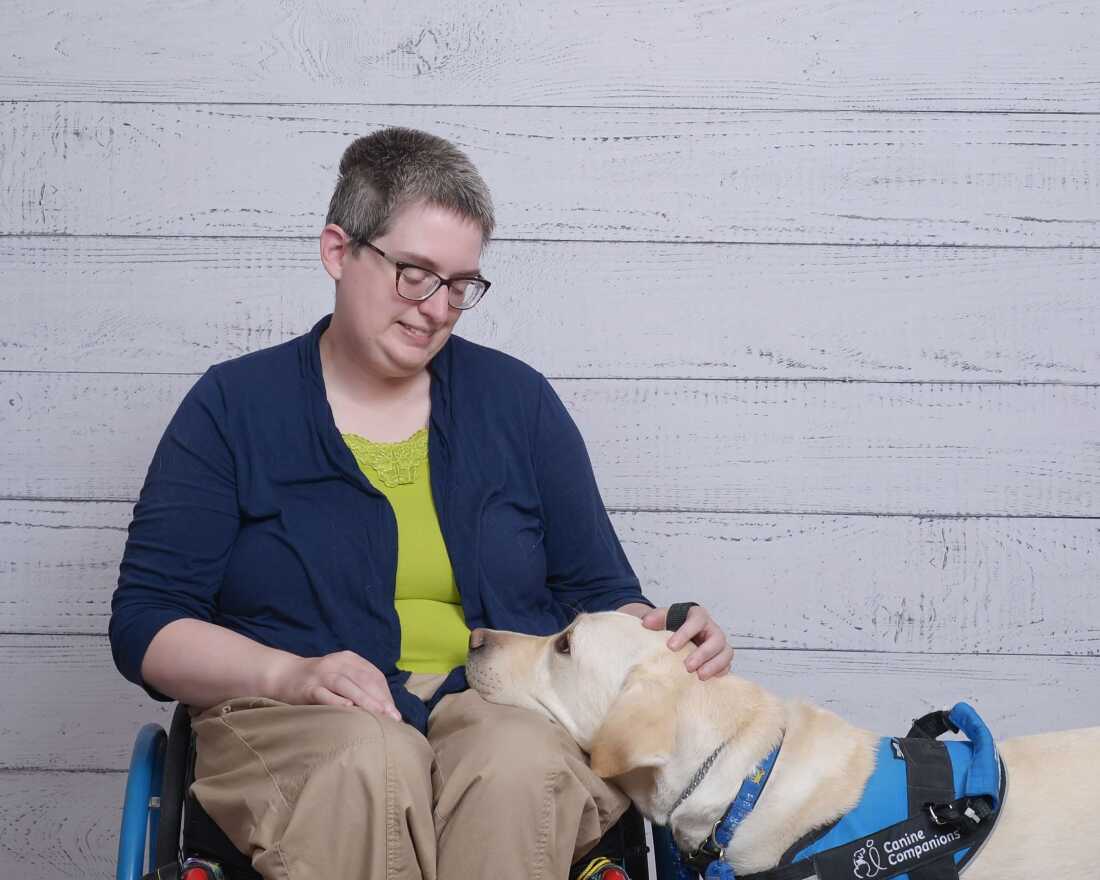
Respondents wrote of laws that seem to confuse hotel staff. Karen Lohr of Oakland, Calif. says front desk clerks often charge her a pet fee for her service dog Milo, a yellow Labrador Retriever — even though that’s not allowed by law.
Lohr is familiar with disability law, in part because she works for the University of California, Berkeley to help disabled students get accessible dorm rooms.
Lohr, who likes to swim, books hotels with pools. By law, those are required to have a lift she can use to get into the pool. “But 90 percent of the time, it’s broken,” she says.
Federal law requires hotels that provide courtesy shuttles to and from airports to include shuttles with wheelchair lifts or provide alternative ways of transportation for wheelchair users. But no one in our survey said they count on these shuttles.
Kelly Mack and her husband, of Washington, D.C., planned ahead for their early-morning flight and booked a hotel close to the airport. A reservations clerk had assured her that the free shuttle to the airport had a lift for her wheelchair. That turned out to be incorrect information. She and her husband were left to hurriedly get to the airport on their own, she in her motorized wheelchair, across narrow sidewalks and a freeway overpass in the pre-dawn dark, a mile to the airport pulling their luggage.
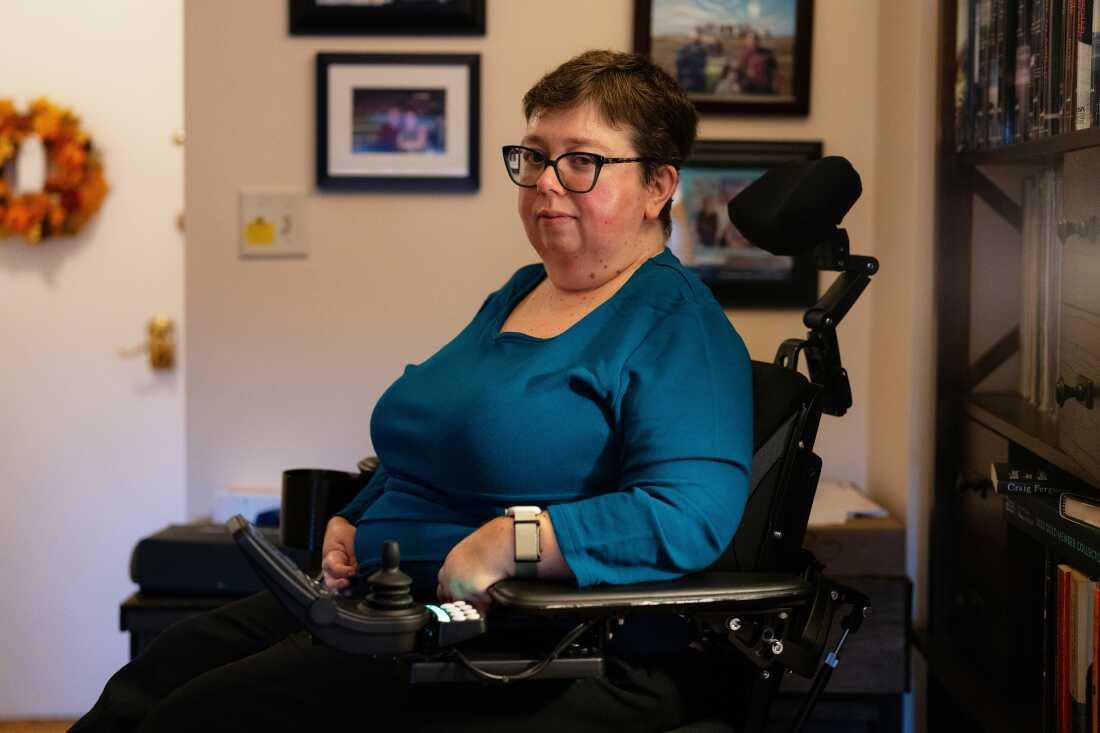
“It was quite frightening” over “some perilous crossings,” Mack says, but it was “the only way we could get to the airport.”
“The majority of our clients are taking the right steps to improve their facilities and provide an excellent experience for the disabled,” says Tima Bell, principal of a California architectural firm that advises hotel companies nationwide.
Bell notes another complication for hotels and the agencies that regulate them: The mixed ownership of many hotels. That building with the bright Marriott, Hyatt or Wyndham sign out front likely isn’t owned by that hotel chain. Often, the owner is a separate company that hires the name-brand chain for its reservations system and to operate the hotel. Sometimes, the hotel parking structure is owned by a third company.

That makes it hard to get consistency from hotel to hotel, even within a brand, making solutions “fairly complex”, says James Bostrom, who helped direct the U.S. Department of Justice division in charge of regulating hotel accessibility. The hotel chain may want to make changes — like lowering beds — but the corporation that owns the building doesn’t want to pay for it. Or changes need to be spelled out in a contract which may not be up for renewal for years.
Shah, the hotel industry executive, says some hotels fear being targeted in what get called “drive-by lawsuits.” In 2023, the Supreme Court heard oral arguments in a lawsuit by a hotel in Maine against a Florida woman who sued over 600 hotels.
Deborah Laufer, who has multiple sclerosis and uses a wheelchair, tested hotel websites and filed suits against hotels she said didn’t give travelers adequate information, as required by law, to know if the hotel was accessible. The hotel questioned her standing to sue since she was simply testing the website and had no intention to book a room.
The Supreme Court then dismissed the case, avoiding a ruling that some disability advocates feared could have weakened the ability of people to sue under civil rights laws such as the ADA.
Supporters of “testers” noted that hotels have had years to get accessibility right yet problems remain common.
Thomas Simonetti for The Washington Post via Getty Images
“You can’t choose which civil rights we’re going to enforce and which ones we’re not,” says Kathryn Sorensen, an associate professor at the University of North Carolina at Chapel Hill who uses a wheelchair and writes about accessible design on her blog, The ADA Nerd. “There would be a major uproar about it for any other minority group.”
Under the ADA, plaintiffs can get attorneys fees, but not damages when they sue private businesses. Shah said hotels are unfairly burdened by a “cottage industry” of “those attorneys looking to make a quick buck” by seeking quick cash settlements.
She says she has “no idea” if the hotel fixed the problem.
Many of the respondents praised individual hotel staff who worked to help them: The front-desk clerk who takes a tape measure to check the height of a bed in advance, the crews that take mattresses off of beds that are too high or fix a broken shower bench or handheld showerhead.
Most people have found chains or specific hotels they praise and seek out–but there was no consensus on the best chain. A chain that was praised by some was a subject of complaints by others.
One thing the respondents do agree on: They don’t trust alternatives to hotels like home-sharing. When places belong to individual owners, they are unregulated by the ADA.
Of those in the survey who say they’ve tried to book a place on Airbnb or VRBO, there were many complaints. David Mengyan of Clarkston, Mich., a frequent traveler, booked a house in the Florida Keys because it was advertised as having an elevator. When he arrived, the elevator didn’t work. Justina Thompson of Flemingsburg, Ky. rented a Tennessee cabin listed as wheelchair accessible. When she got there, the entrance indeed was wide enough to fit her wheelchair, but the bedroom and bathroom doors weren’t.
Her children, then 15, 13, and 11-years old, carried her to the bathroom and to bed.
“It was a terrible vacation for me and my kids,” Thompson says.
After years of struggling to find accessible hotels and rentals, Lorraine Woodward and her husband, of Raleigh, N.C., built their own accessible beach house. She has muscular dystrophy and uses a wheelchair. Her two sons have muscular dystrophy, too.
But it wasn’t until the family started renting out their accessible house that they discovered how many other people wanted something similar.
Woodward saw that “their stories are all the same: How hard it is to find an accessible place to stay and how few short-term rentals there are.” She then started her own company, Becoming rentABLE, to verify accessible short-term rentals across the country..
“It’s really in some ways ruined my retirement years,” says Julie Withers of Milwaukee, who uses a manual wheelchair because of a spinal cord injury.
The retired medical transcriptionist wanted to travel — to visit friends and family in Arizona and Florida, to see the rare blue-ghost fireflies in Kentucky. But she’s had too many bad experiences at hotels. She couldn’t find an accessible hotel at her daughter’s wedding on an island in Georgia and needed to ask her ex-husband “to pick me up and put me on the bed.”
“The world is moving on little by little,” Withers says of new laws and opportunities for people with disabilities. “Why do we have to keep fighting hotels?”