
Demond Wilson, ‘Sanford and Son’ actor, dead at 79
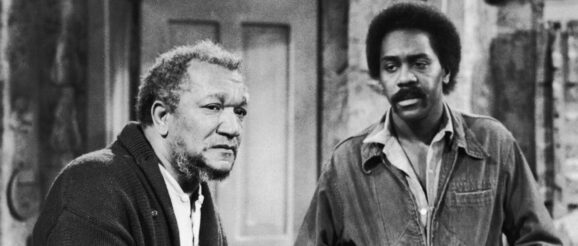
NBC Television/Getty Images/Hulton Archive
Demond Wilson, the actor best known for playing Lamont Sanford, the son in the popular 1970s NBC primetime comedy series Sanford and Son, has died.
“I had the privilege of working with Demond for 15 years, and his loss is profoundly felt,” said Goldman. “He was an unbelievable man, and his impact will never be forgotten.”
Wilson was in his 20s when he landed the role of Lamont Sanford, the put-upon offspring of the cantankerous Fred Sanford, played by Redd Foxx. The dad got all the best lines, but junior held his own in their frequent disputes. Wilson reminisced about his time on the series in his 2009 memoir Second Banana: The Bitter Sweet Memoirs of the Sanford and Son Years.
Wilson went on to star as a struggling gambler in the sitcom Baby…I’m Back! in the late 1970s, and as the more laid-back of the divorcees in The New Odd Couple, a TV show based on Neil Simon’s hit play The Odd Couple. His film credits include Cotton Comes to Harlem (1970), The Organization (1971), Full Moon High (1981) and Hammerlock (2000).
Wilson was born in Valdosta, Ga., in 1946 to a working class Catholic family and grew up in New York City’s Harlem neighborhood. He studied dance as a child and performed on Broadway. He went on to serve in the U.S. Army in Vietnam. Upon his return, he appeared in various shows on- and off-Broadway, and eventually moved to Los Angeles. In 1971, Lear cast him in an episode of the popular sitcom All in the Family. The following year, Sanford and Sons set him on a path to stardom.
Wilson carried a strong Christian faith since childhood. After suffering a life-threatening rupture to his appendix at age 12, he sought to find a way to devote his life to God. In the 1980s, he was ordained as a Pentecostal minister, and went on to lead parallel careers in acting and preaching. His 1998 book, The New Age Millennium: An Expose of Symbols, Slogans and Hidden Agenda, is a critique from a Christian perspective of the New Age movement and Freemasonry, among other quasi-spiritual approaches.