
NPR shopped for 114 items at Walmart to see how prices changed
LIBERTY COUNTY, Ga. — What brings Greg Reyes to this Walmart south of Savannah are the low prices. He and his wife keep a close eye on their limited budget; she’s retired and he’s disabled. Their grocery list is always the same. But the prices have been changing.
“I used to pay like $40 a year ago, and now we’re paying like $60,” Reyes says. In his bags today are some chicken, turkey and beef. Other things simply had to go. “We don’t buy ice cream no more because it’s expensive,” Reyes says. “It’s kind of sad, but we have to do it like that.”
The cost of living in the U.S. rose 2.7% in December compared with a year before, according to Tuesday’s federal data. That’s a steady slowdown after a yearslong stretch of intense inflation, but still painful. The past year also brought a global trade war, as President Trump imposed sweeping tariffs on nearly all imports. And the world continued to grapple with extreme weather, from droughts to downpours.
All of this is showing up in our shopping carts.

Prices in NPR’s basket rose 5% on average last year
A few disclaimers about our method:
- We went through almost every aisle in this Walmart to come up with the 114 items. (The full table is below.) To account for possible changes in package sizes, we focused on the price per unit, whether it was an ounce of salsa or a square foot of aluminum foil.
- NPR reached out to the producers of all the items on our list that changed in price. Most companies did not respond. The few that did — including Kikkoman and Campbell’s — noted that Walmart, as the retailer, has ultimate control over the prices that shoppers see on shelves.
- A Walmart spokesperson said in a statement: “We remain dedicated to providing our customers Every Day low prices, with the goal of having the lowest price on a basket of goods over time.” A store, for example, might extract deals from suppliers or charge slightly more for several items in order to sell something else at a break-even price or even below cost.
Tariffs loom over store shelves
With tariffs being the biggest story in retail in 2025, signs of their impact inevitably showed up in Walmart’s aisles. Though it’s hard to pin any price increase on tariffs with certainty, the through line was noticeable.
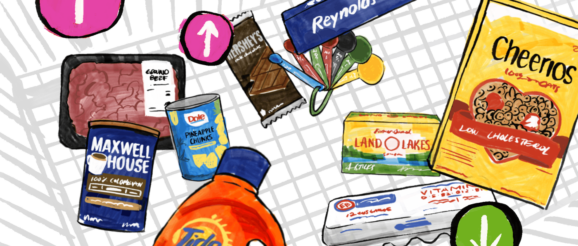
Some of the biggest price jumps were on items imported from countries saddled with hefty tariffs: Walmart’s store-brand paper folders made in China (up 46%), swai fish fillets from Vietnam (up 34%), Farberware’s plastic measuring spoons made in China (up 19%) and Schwinn’s infant bike helmet, which used to be made in China but is now made in Vietnam (up 18%).

Reynolds Wrap, whose aluminum foil rose in price by 13%, called out “historic and sustained cost increases over the past year, driven by tariffs, global supply pressures, rising energy costs, and limited availability.” Much of U.S. aluminum comes from Canada, and these imports now face a 50% tax.
Walmart in May warned that new tariffs would lead to higher prices, as Trump threatened 145% tariffs on goods from China. The White House later paused, changed up and even rolled back some of its trade plans, namely on food items. By August, Walmart officials said tariff costs were rising “each week,” although the company was able to mitigate many of them. In November, incoming Walmart CEO John Furner said tariffs brought “less impact” than expected early in the year.
Climate chaos roiled many industries
Some of the items with the worst price hikes are repeat offenders: coffee, beef and chocolate. They, too, were affected by tariffs — such as beef and coffee coming from Brazil — but the main culprit was the weather.
At this Walmart, the price of Maxwell House ground Colombian coffee rose by 46% in 2025 and its breakfast K-Cups by 34%. The costs of Hershey’s and Lindt chocolates jumped around 26%. A pound of ground beef went up 30%, and the store now prominently displays a cheaper option: a blend of beef and ground pork.
The cost of coffee beans has soared as climate change has brought erratic rainfall patterns, floods and droughts to farmlands. Cacao harvests, too, have come up short for three years straight; West African farmers, who grow most of the world’s supply, have dealt with extreme weather, changing climate patterns and disease in their aging trees. And the U.S. beef supply is at its lowest in decades, driving cattle prices to record highs, in part because of drought.
Kraft Heinz (which owns Maxwell House), Hershey and Lindt & Sprüngli in statements all cited the unprecedented higher costs of key raw materials, adding that they’ve also absorbed or offset part of those costs.
Shrinkflation continues in the laundry aisle
The label continuously promised enough detergent for 64 loads of laundry.
“The result is superior cleaning performance in a smaller dose,” a Procter & Gamble representative said.
Good news! Some things are cheaper
The biggest price drop finally came for eggs after record highs earlier in the year due to the persistent bird flu. By December, the price of a dozen eggs at Walmart dropped 30%. The cost of butter also dipped, by almost 16%, thanks to a glut in dairy production.