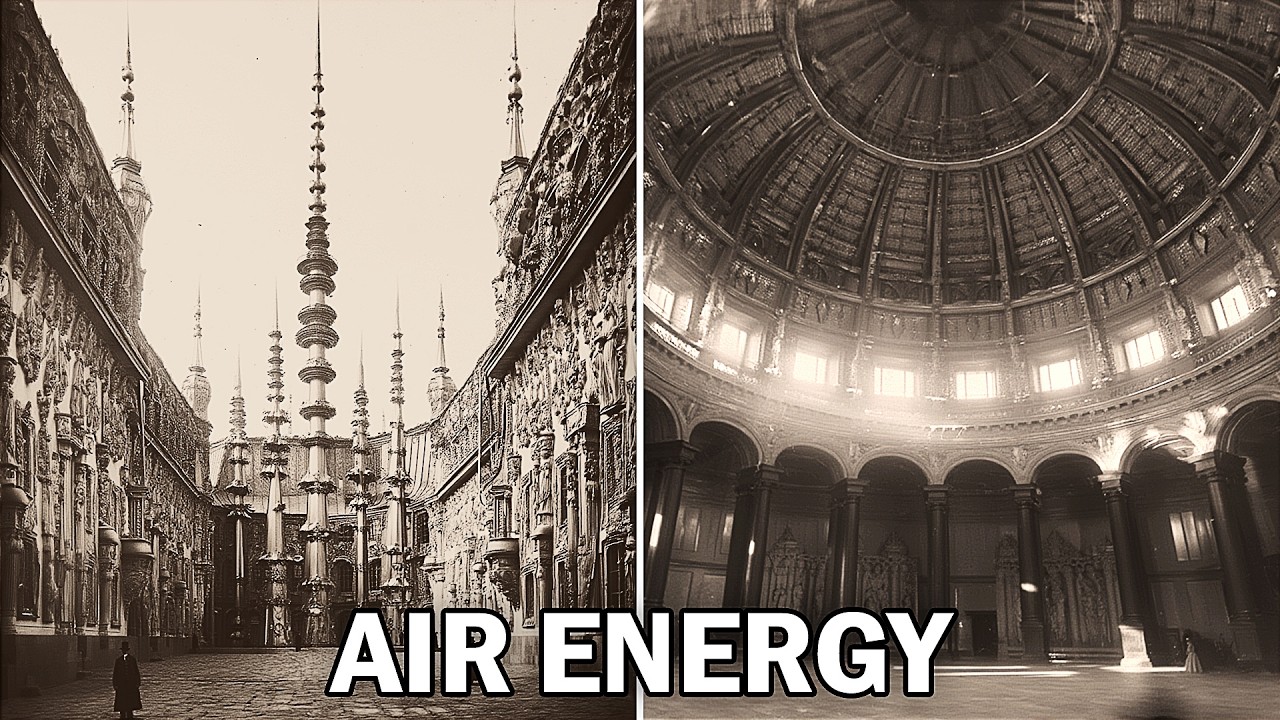
How did hundreds of millions of people move through cities, work in factories, trade across continents, and live in architecturally identical buildings without the communication technology we’re told was necessary? From the canal networks of Europe to the railway systems of Asia, from the street grids of American cities to the gas distribution systems appearing simultaneously worldwide, the physical infrastructure reveals coordination on a scale that official history cannot explain.
As I examined municipal records, engineering journals, and the buildings themselves, a disturbing pattern emerged: the systems were too sophisticated, appeared too suddenly, and operated with an expertise that suggests inheritance rather than invention. These weren’t primitive developments or gradual improvements—they were mature networks deployed across continents within decades, all following identical principles, all requiring knowledge that has since been systematically forgotten.
This investigation explores daily life in the world we call Tartarian—the movement systems that connected continents, the technologies that powered cities, the organizational structures that coordinated global commerce, and the architectural evidence still standing in every old city. The deeper we examine the coordination problem, the infrastructure that remains, and the knowledge that disappeared, the more difficult it becomes to accept the official narrative of isolated development rather than inherited systems deliberately obscured.
The material on this channel presents exploratory interpretations of history and imaginative speculation, conveyed through narrative storytelling rather than precise historical documentation. Viewpoints and visual representations are dramatized or intentionally constructed to support alternative narrative exploration. Visual elements may at times be created using automated or generative tools. The content shared should not be considered factual.